Special education comes with its own language: IEP, 504, FAPE, LRE, prior written notice, IEE. Parents are expected to be equal members of their child's IEP team, but few are given a guidebook. The good news is that free, expert help exists in every state. Here is where to find it.
Your State Parent Center: Free Help for Families
The U.S. Department of Education funds a network of nearly 100 Parent Training and Information Centers (PTIs) and Community Parent Resource Centers (CPRCs) across the states and territories. Their job is to help families of children with disabilities, from birth to young adulthood, understand their rights and take part in their child's education.
The Center for Parent Information and Resources (CPIR) is the central hub for this network. Use its Find Your Parent Center tool to locate the center that serves your area.
What a Parent Center Can Help With
- Understanding your rights under the Individuals with Disabilities Education Act (IDEA)
- Requesting an evaluation and understanding the results
- Preparing for IEP meetings and reviewing a draft IEP
- Understanding the difference between an IEP and a 504 plan
- Working through disagreements with the school, including mediation and other dispute resolution options
- Planning the transition from school to adult life
CPIR also maintains a large resource library on disabilities, IEPs and evaluation, much of it available in Spanish.
Council for Exceptional Children (CEC): For Educators, Useful for Parents
The Council for Exceptional Children is the premier professional association for special education professionals. It develops professional standards, publishes research and practice guidance, and hosts the annual CEC Convention & Expo.
- Educators can use CEC for professional development, evidence-based practices and networking.
- Parents can browse CEC's resources to understand the practices teachers are trained in, which makes it easier to ask informed questions at IEP meetings.
Classroom-Ready Supports You Can Use at Home
Teacher resource sites such as Twinkl's autism and special education collection offer printable visual timetables, social stories, emotion cards and sensory supports. Many of these resources require a subscription, and some are free with an account.
Using the same visual supports at home and at school helps children know what to expect everywhere. Our guide to visual supports for autism at home explains how to choose, make and share them.
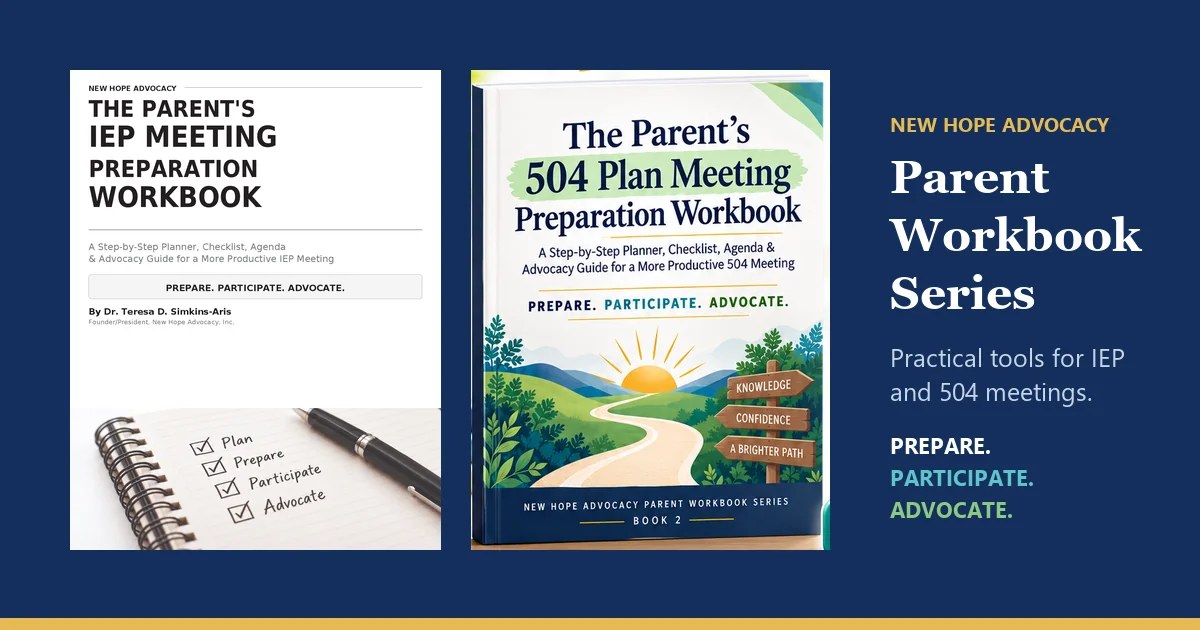
How to Prepare for Your Next IEP Meeting
- Gather your documents. The current IEP, recent progress reports, evaluations and any outside reports from doctors or therapists.
- Write down your priorities. List your top three concerns and your child's strengths. Include your child's own goals whenever possible.
- Request drafts in advance. Ask whether you can see draft goals or evaluation reports before the meeting.
- Call your Parent Center if anything is unclear. Many centers can help you prepare or review documents.
- Follow up in writing. After the meeting, send a short email summarizing what was agreed.
For a step-by-step walkthrough, read our family guide to navigating the IEP process. Planning for life after high school? See our transition planning guide.
Stop Digging for Paperwork
Every IEP meeting, evaluation and new provider asks for the same documents. Our guide to building a digital special education binder shows how to organize them once. New Hope Advocacy members can store IEPs, evaluations and medical records in secure folders and share them with schools, advocates and family members in a few clicks. See member features.
Quick Reference
| Resource | Who It's For | Use It To |
|---|---|---|
| Your Parent Center (via CPIR) | Families | Understand your rights and prepare for IEP meetings |
| CPIR resource library | Families and professionals | Read about disabilities, evaluations and IEPs, in English and Spanish |
| Council for Exceptional Children | Educators (and curious parents) | Professional standards, practices and development |
| Twinkl special education resources | Teachers and parents | Printable visual supports and social stories |
Need Someone in Your Corner?
New Hope Advocacy helps families find agencies, advocates and resources near them. Search the agency directory, create your account, or contact our team →
Have questions or need support?
Our team is here to help. Reach out and we'll get back to you.
Connect With UsNew Hope Advocacy
Author